
Whistler and the invention of the modern hang
Whistler treated the room as part of the picture. He designed his own frames, chose the wall color and hung work in a single line, which is roughly how every gallery has done it since.
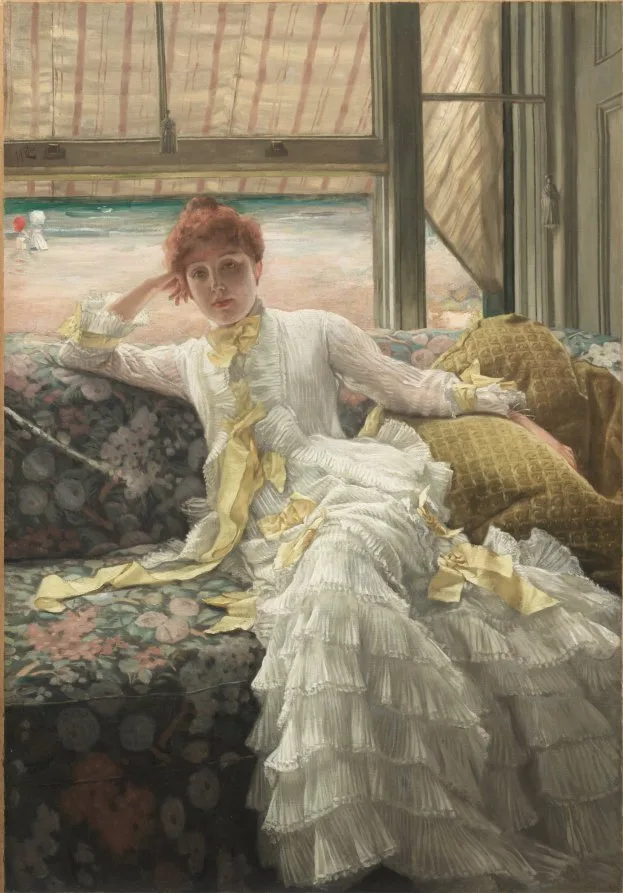
James McNeill Whistler spent the last twenty years of his life arguing about presentation as much as about painting. He designed the frames for his own pictures, chose the color of the walls they hung on, specified the carpet and in one case the flowers and the uniforms of the attendants. This looks like vanity until you compare it with what a normal exhibition looked like in London in 1880. Pictures were stacked to the ceiling in gold frames, three and four rows deep, and the visitor was expected to cope.
His alternative was a single line of works at eye level, generous space between them, and a room decorated to a scheme that suited the pictures. He first pushed it hard in 1883, at a show of Venice etchings in London that he titled as an arrangement in white and yellow. The critics treated the whole thing as a joke. Within a generation it was standard practice in every serious gallery in Europe.
Frames, walls and the picture as an object
The frames matter more than they sound. Whistler had them made narrow, often reeded or patterned, painted or gilded to a tone he chose against the canvas, and he signed them with his butterfly monogram so that frame and picture read as one object. Collectors who later reframed his work in heavy period gold destroyed part of what he made. Original Whistler frames are now treated as part of the work and their presence affects both the scholarship and the price.
The Peacock Room is the extreme version of the same idea. Whistler was asked to make modest adjustments to a dining room in the house of the shipowner Frederick Leyland and instead repainted the entire interior in blue and gold, at length and without agreement about the fee. The row that followed ended the friendship and cost him the commission money. The room survives intact at the Freer Gallery in Washington.
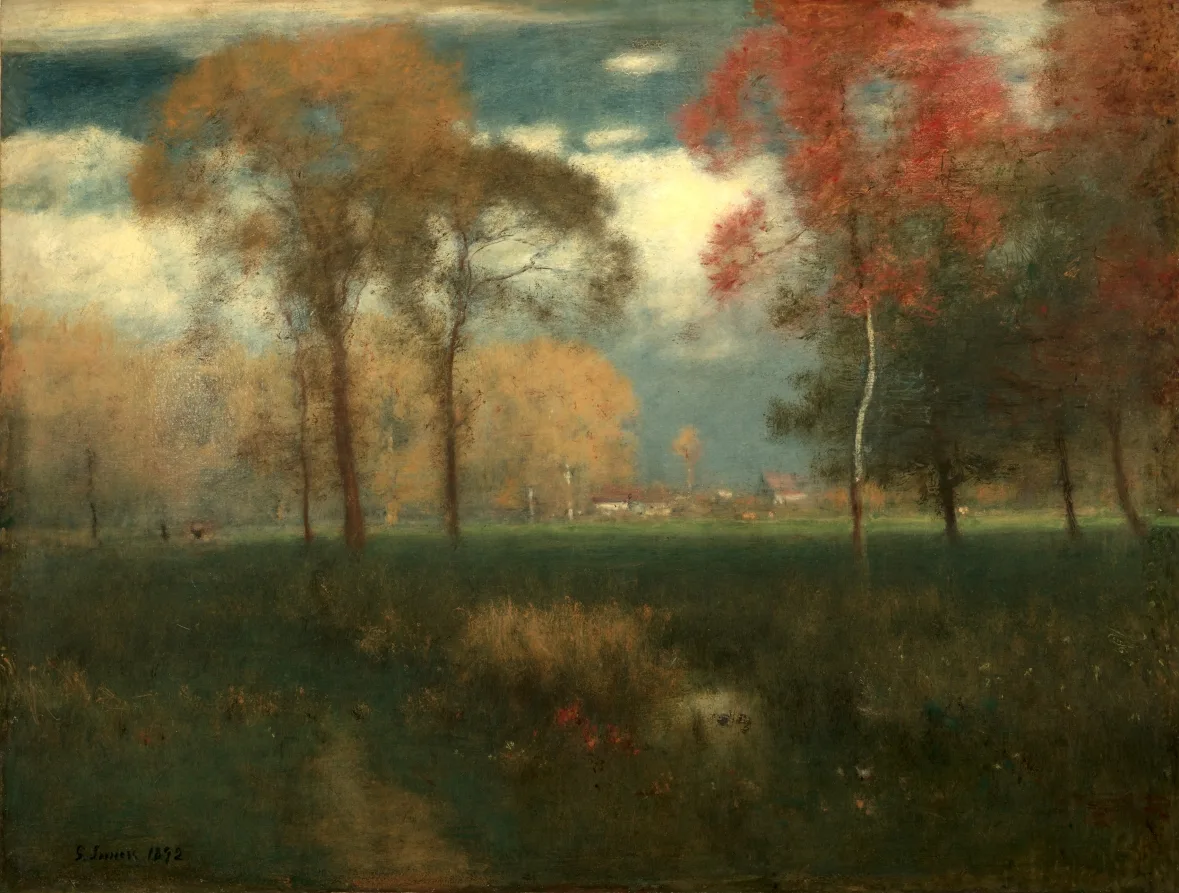
The late paintings themselves got smaller and quieter. He worked on small panels, often shop fronts and figures seen at dusk, and on portraits that took dozens of sittings and were scraped down between them. His wife Beatrice died in 1896 and the work after that thins out. He was elected president of the International Society of Sculptors, Painters and Gravers in 1898 and ran a teaching studio in Paris for three years.
- A single line of pictures at eye level rather than a stacked wall
- Wall color chosen against the pictures rather than a default red or green
- Narrow frames toned to the canvas and signed with the butterfly mark
- Printed catalogues designed as part of the exhibition rather than as a list
- Limited numbers of works, so that each one has room to be looked at
- A named color scheme for the whole room, treated as the title of the show
Every item on that list is now so ordinary that it is invisible. That is the usual fate of a good idea about display. The people who adopted it were dealers rather than museums, because a sparse hang makes each object look more valuable and easier to sell, and the museums followed the trade rather than the other way round.
What the market does with him now
Whistler is an awkward figure commercially. The etchings and lithographs come to market regularly and are the affordable way in, the small panels appear from time to time, and the major portraits are almost all in institutions. Condition problems are common because he used thin paint and unstable grounds on some pictures. The Tate holds a substantial group, and the Tate artist index is a straightforward starting point.
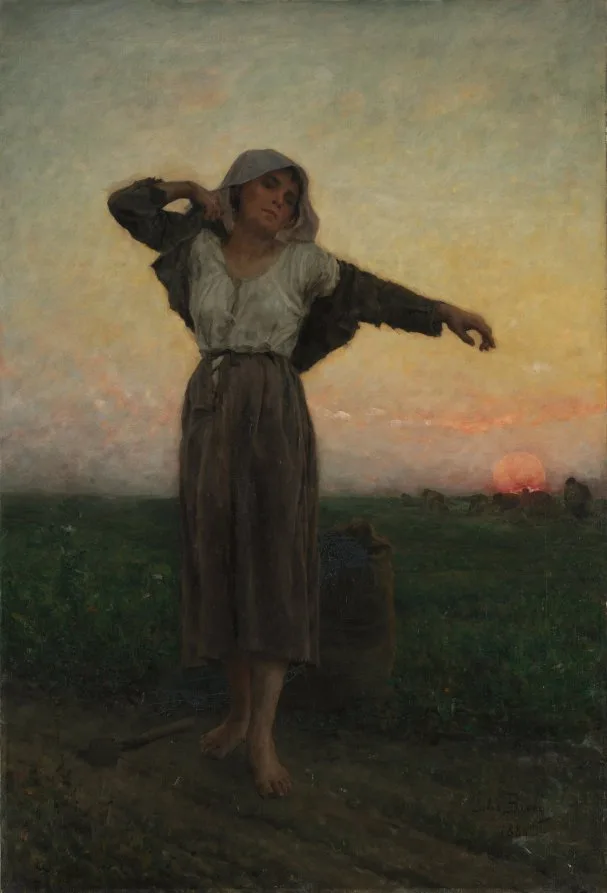
Art should be independent of all clap-trap, should stand alone, and appeal to the artistic sense of eye or ear.
James McNeill Whistler, The Gentle Art of Making Enemies
He died in London in July 1903, the same year as Pissarro and Gauguin. The paintings are admired rather than loved, and the etchings are a specialist taste. His largest surviving influence is the empty white wall with one picture on it, which is the thing almost nobody credits to an artist at all.
Want a curator’s take?
Ask a curator how this connects to the artists and work in the directory.
Ask a Curator-

Emily Dickinson: The Reclusive Poet Who Changed American Verse
Born in 1830 in Amherst, Massachusetts, Emily Dickinson wrote nearly 1,800 poems during her lifetime, though only a handful were published before her death in 1886. Her innovative use of form and syntax reshaped American poetry.
-
July 1951: J. D. Salinger’s The Catcher in the Rye Reaches American Readers
On July 16, 1951, Little, Brown published J. D. Salinger’s first and only full-length novel. The book quickly drew both strong praise and sharp criticism, while its teenage narrator became a distinctive voice in American fiction.
-
Charles Rennie Mackintosh and the Glasgow School of Art
Mackintosh won the competition for the Glasgow School of Art in 1897 as a junior draughtsman on a small budget. The building he produced is the one work everyone agrees about.
Read more in the Journal.
Or browse the full Artists Directory.