
Russian Contemporary Painters, and Why the Names Stayed Quiet
Serious figurative work made a long way from the rooms where reputations get decided, and the artists who kept making it anyway.
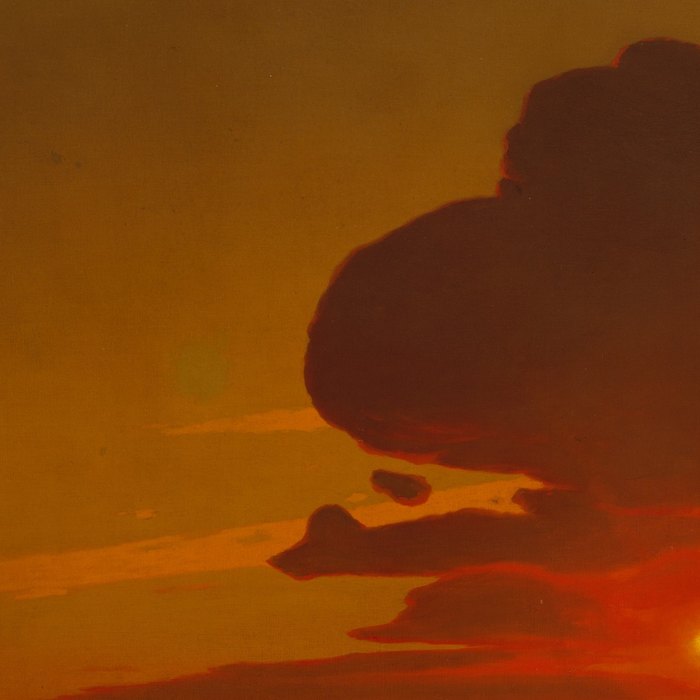
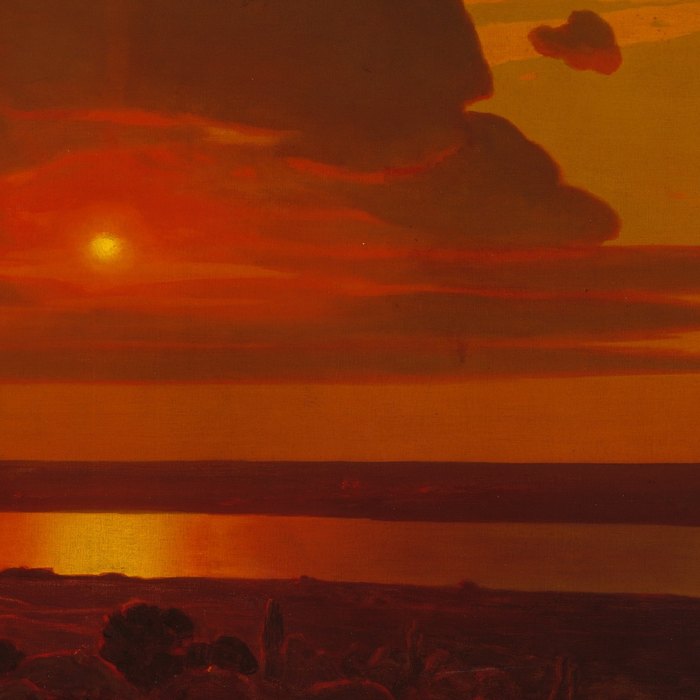
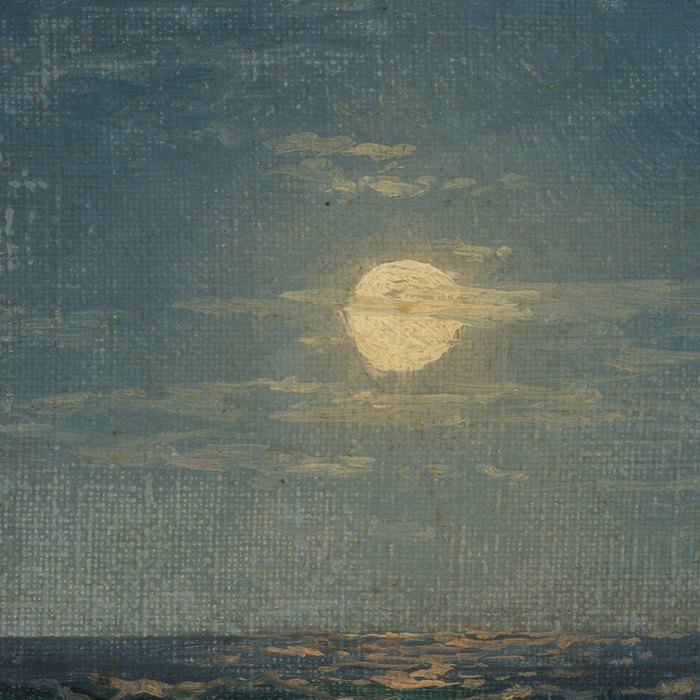
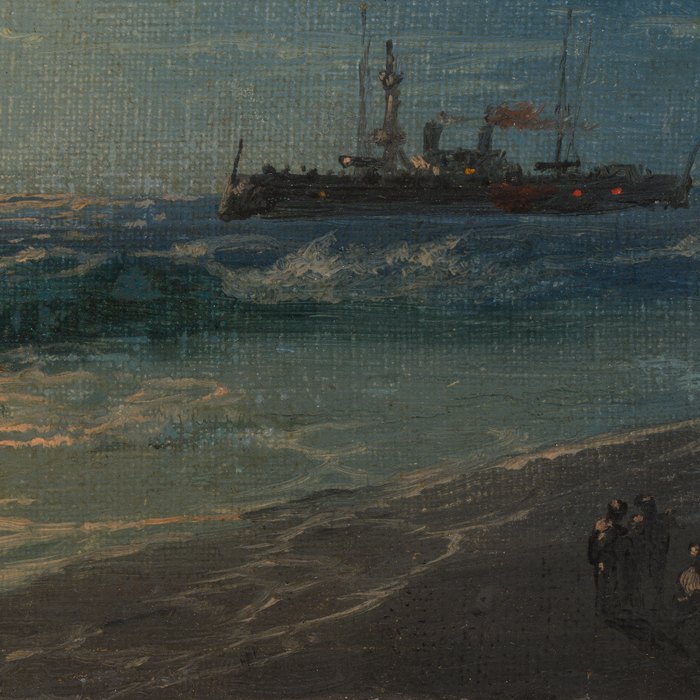
Details from Arkhyp Kuindzhi, Red Sunset, 1905-08, and Ivan Aivazovsky, Ship by Moonlight. Both at The Metropolitan Museum of Art, public domain. The painters below come out of that Russian landscape tradition; the canvases here are not theirs.
Why These Careers Stayed Quiet
Russian painting sits in an odd position. The historical work is treated with enormous seriousness in museums and lecture halls, while the people painting today can spend a whole career without a single Western studio visit. The gap has very little to do with the quality of the painting.
What happened is easy to date. Attention arrived in the early 2000s, and left again. Dealers went elsewhere, the auction rooms lost interest, and the artists simply carried on working. Prices settled at something close to the cost of a life spent painting rather than the cost of a rumour. In 2026 you can stand in front of a figurative painting made over four months and hear a number that makes sense.
Almost everything on this page is figurative, which has been unfashionable in Western art schools for a generation. That is not a defect. Painting a person well is unforgiving work, and the training these artists came up through still treats it as the hardest thing you can ask of a student.
-
Partner Gallery
Marina Volkova
Russia
Interiors and portraits in oil. Repin-trained, working from a studio in Saint Petersburg.
Browse the Directory -
Partner Gallery
Pavel Orlov
Russia
A Moscow realist who builds paintings out of memory and long looking.
Browse the Directory -
Partner Gallery
Yulia Sokolova
Russia
Kazan-trained, eight years into a practice where figure and ground carry equal weight.
Browse the Directory
Want to know more about one of these painters?
We work with these artists directly. An editor can tell you what is in the studio at the moment, what a piece costs, and whether a visit can be arranged so you see the surface in person.
- What is available right now, and what it costs
- Studio visits, where the artist is open to them
- An honest read on where a career is heading
Alex Kravetz
Senior Editor, LaArt
Several of these artists sell through RakovGallery, a gallery we partner with. Nobody paid for a place on this page, and the writing does not change because of it.
Figurative Painting
Figurative work out of these studios leans on observation rather than abstraction. The painters draw from life, sit with portraits, study rooms, and build outwards from that. What ends up on the canvas is skill pointed at something real: a person under a window, a remembered interior.
It is unforgiving in a way abstraction is not. There is no gesture to hide behind. Either a head sits correctly on its neck, the fabric behaves, and the space holds together, or the whole painting tells on the artist. Russian schools still treat that as the first thing a painter learns, not the last.
See figurative work by Marina Volkova and Yulia Sokolova in the directory.
Oil Painting and Contemporary Realism
Oil is slow, and that is the point. The realists here use it because it lets a surface accumulate, layer over layer, the picture creeping towards something specific over weeks. This is not trickery or trompe l'oeil. It is a decision to describe the world as it was actually seen.
Western galleries lost patience with that approach around 2000, and the loss of interest turned out to be a kind of freedom. Nobody in these studios spent twenty years being pressured to look contemporary. The paintings feel less exhausted for it.
See realist oil work by Pavel Orlov in the directory.
Where the Work Has Gone
Paintings from these studios hang in private collections across Europe and North America. Several of the artists have shown at fairs abroad, mostly in Europe, where a small circle of collectors has been following this work for years.
FAQ
Which Russian painters do you rate?
It depends what pulls you in: a face, a colour, a room, a scale. We profile Marina Volkova, Pavel Orlov and Yulia Sokolova because each has a practice you can trace over years and a hand you would recognise anywhere. They are not the only serious painters working there right now, only the three we know closely enough to write about.
Will the work go up in value?
Nobody can promise that, and we would not trust anyone who did. If you buy a painting you want on your wall in ten years, you have already got what you paid for. If you buy expecting a resale, you are betting on attention that may never arrive. We write for the first kind of reader.
Where does the work actually sell?
Several of the artists here sell through RakovGallery, a gallery we partner with. Others work with dealers abroad, and a couple sell straight out of the studio. Write to an editor and we will tell you where a particular name stands, or ask about a studio visit.
Several of these artists sell through RakovGallery, a gallery we partner with, and a tagged link earns us a commission if a sale follows. No artist has ever paid to be written about here.
Keep reading: every artist we profile, A to Z, or the twelve names on this year's artists to watch list.