
Paul Gauguin in the Marquesas and what happened after 1903
Gauguin spent his last two years on Hiva Oa, in debt, in court, and painting. He died in May 1903, and the reputation that made his prices was assembled by other people afterwards.
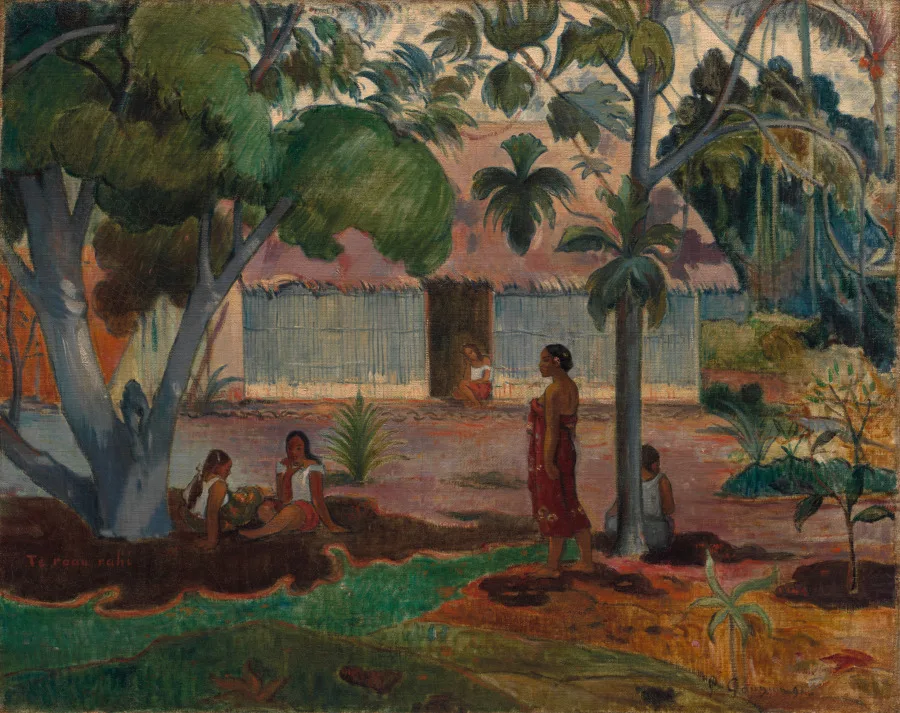
Gauguin left Tahiti for the Marquesas in 1901 because it was cheaper and because he wanted to be further away. He built a house at Atuona on Hiva Oa, put a carved lintel over the door, and kept painting. He was in poor health, heavily in debt, and living on payments from a dealer in Paris he had never learned to trust. He died there on 8 May 1903, at fifty four.
The dealer was Ambroise Vollard. From 1900 Vollard sent monthly money in exchange for a fixed number of canvases a year, which is the only reason the last Marquesan pictures were painted at all. Gauguin complained about the terms constantly and took them anyway. The arrangement was ordinary for the period and it looks predatory only in hindsight, once the prices moved.
The last two years
He spent much of that time in fights with the colonial administration. He advised islanders not to send their children to the mission school and not to pay a tax he considered unjust, and he wrote letters accusing local officials of corruption. In March 1903 a court sentenced him to three months in prison and a fine. He was preparing an appeal when he died, and the sentence was never served.
The painting from those two years is not a decline. The canvases are quieter than the first Tahitian pictures and the color is heavier, with a lot of dark violet and green, and the subjects turn toward horsemen, riders under trees and figures in flat interiors. He was also writing. The manuscripts he left, including the one usually called Avant et Apres, did as much for his posthumous reputation as the paintings.
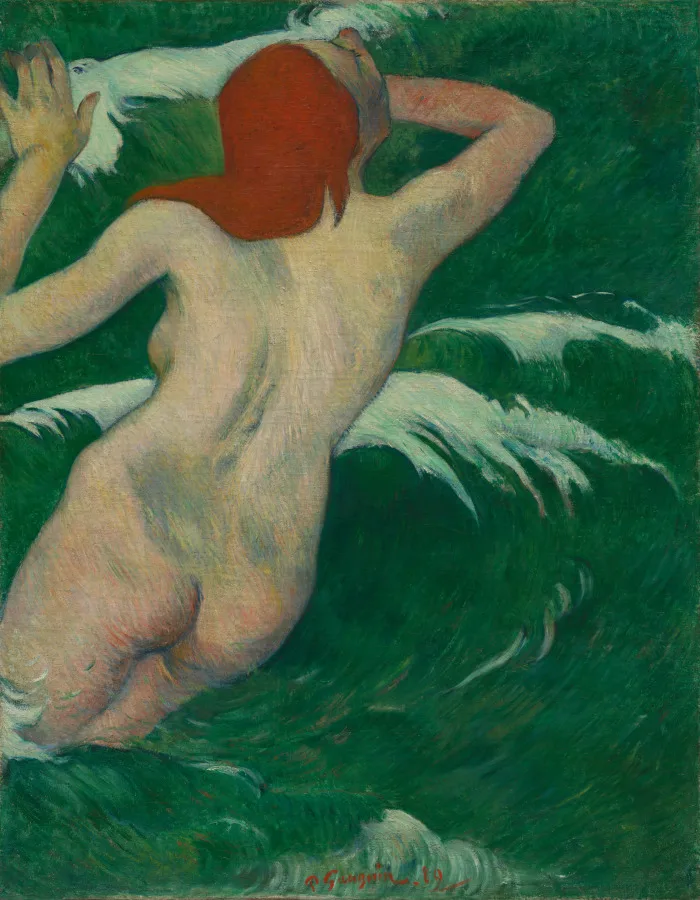
What happened to the estate is the part collectors should know. A local sale in Papeete in September 1903 dispersed his effects, and things went for very small sums to whoever was in the room. Some of the buyers had no idea what they were handling and some did. Works from that sale surfaced over the following decades with provenance that begins in a shipping crate rather than in a gallery.
- The Papeete sale of 1903 is the origin point for a number of surviving Marquesan works
- Victor Segalen, a naval doctor who arrived shortly after the death, acquired material there
- Vollard held Gauguin stock in Paris and released it slowly rather than all at once
- The Salon d Automne staged a large Gauguin retrospective in 1906 that fixed the reputation
- Carvings and objects from the house were dispersed separately and are harder to trace
- Forgeries and misattributions cluster around the Tahitian and Marquesan years for that reason
The 1906 retrospective at the Salon d Automne is the event that matters commercially. It gathered a large group of works in front of the Paris trade and in front of younger painters, and prices began to separate from the rest of the post-impressionist field soon afterwards. Reputation was built by a dealer, a memorial exhibition and a set of published manuscripts. The artist contributed nothing to any of it, having been dead for three years.
Reading a Gauguin provenance
Because the estate was scattered in a colonial port with no records worth the name, provenance for the late work often has a hole in it between 1903 and the 1920s. Serious catalogues are open about this. A clean unbroken chain back to the artist is the exception here, and a seller who offers one without documents is making a claim rather than a statement. The Musee d Orsay in Paris and the Art Institute of Chicago both hold well documented examples worth comparing against.
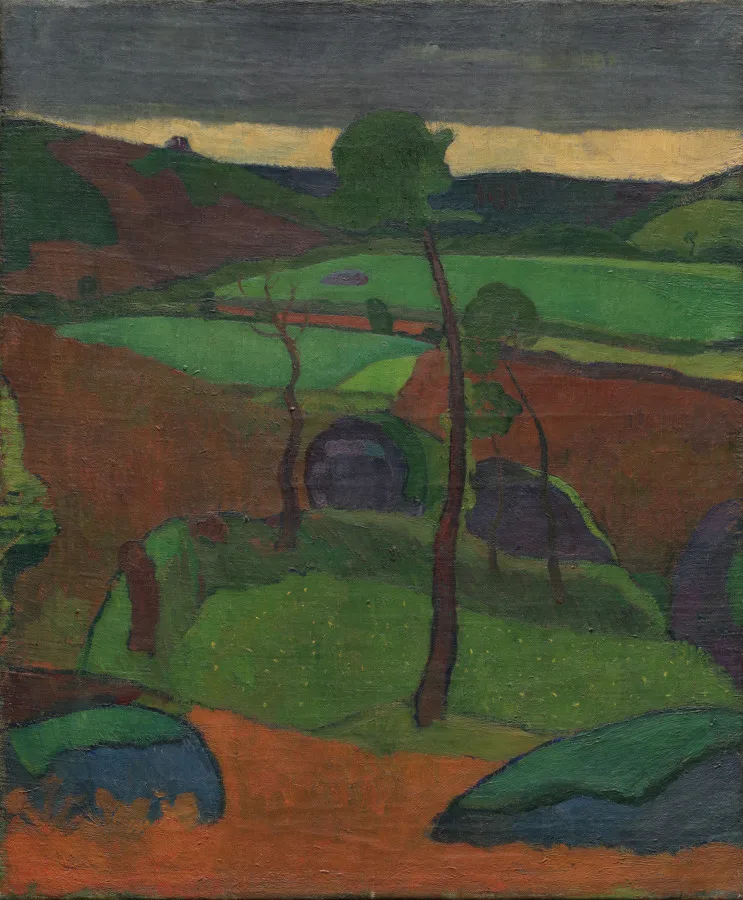
An estate dispersed at a local auction, in a place with no art trade, produces exactly the kind of gap in the record that specialists spend the next century arguing about.
LaArt editorial note
Gauguin is a useful case for anyone who assumes that value follows quality directly. The pictures did not change after May 1903. What changed was that a dealer had stock, a critic had a story and a retrospective put both in front of the right room. That sequence is still how reputations get priced.
Want a curator’s take?
Ask a curator how this connects to the artists and work in the directory.
Ask a Curator-

Emily Dickinson: The Reclusive Poet Who Changed American Verse
Born in 1830 in Amherst, Massachusetts, Emily Dickinson wrote nearly 1,800 poems during her lifetime, though only a handful were published before her death in 1886. Her innovative use of form and syntax reshaped American poetry.
-
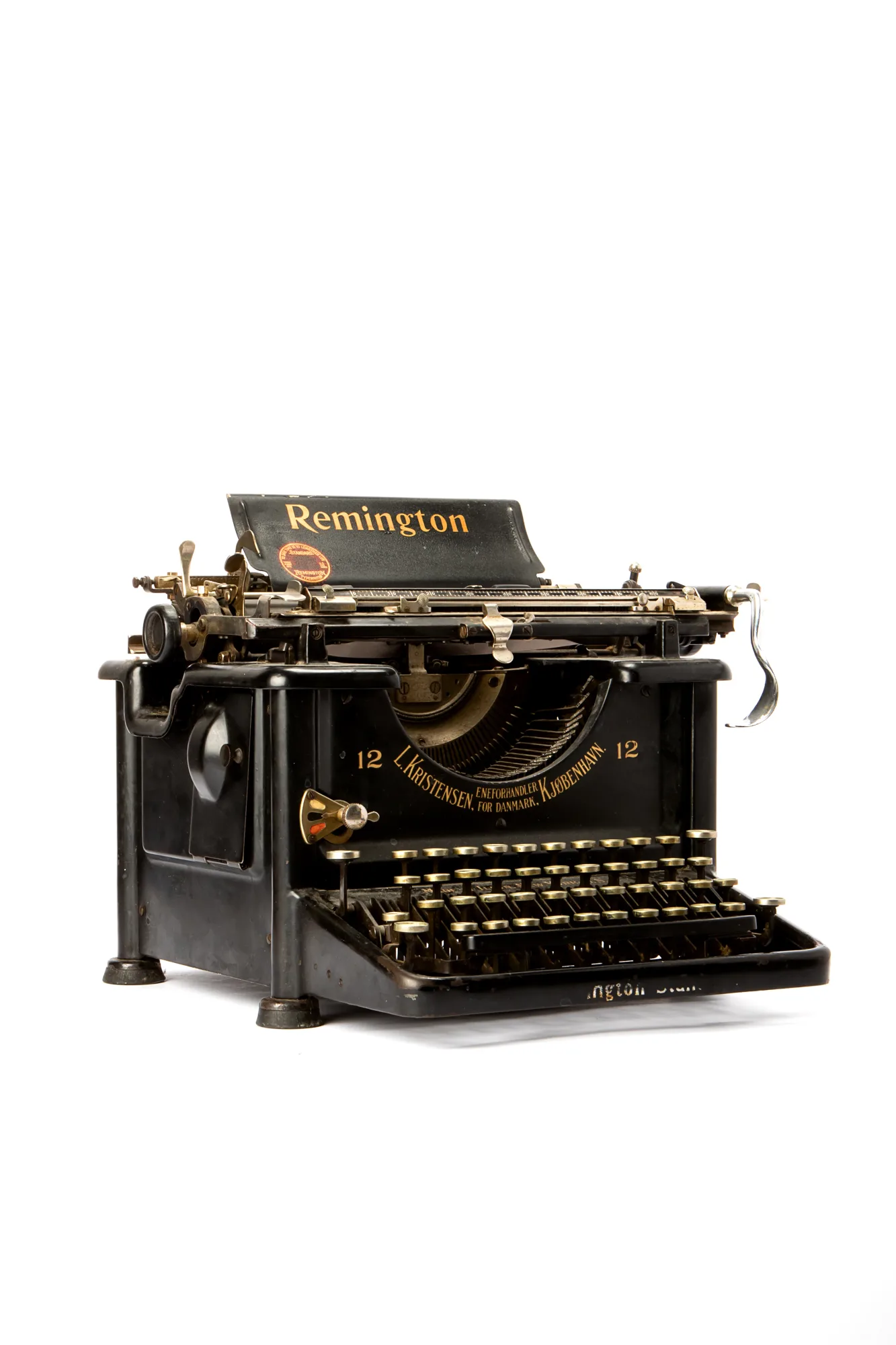
July 1951: J. D. Salinger’s The Catcher in the Rye Reaches American Readers
On July 16, 1951, Little, Brown published J. D. Salinger’s first and only full-length novel. The book quickly drew both strong praise and sharp criticism, while its teenage narrator became a distinctive voice in American fiction.
-
Charles Rennie Mackintosh and the Glasgow School of Art
Mackintosh won the competition for the Glasgow School of Art in 1897 as a junior draughtsman on a small budget. The building he produced is the one work everyone agrees about.
Read more in the Journal.
Or browse the full Artists Directory.