
How to spot an emerging artist before the market does
Nobody keeps a register of talent, so collectors build their own. These are the dull, checkable signals that tend to appear before prices move, and the loud ones that predict almost nothing.
Emerging is a market word, not a stage of life. It describes an artist whose prices have not yet been fixed by repeated public sales, which is why a painter of sixty can still count as emerging while a painter of twenty five is already priced. Buying at that stage means paying for evidence rather than for consensus, and evidence is far cheaper than consensus will ever be. The skill worth having is reading that evidence early, and knowing which parts of it are noise.
There is no register of talent to consult, so you end up building your own. The signals that matter are dull ones: how often the artist works, who has already committed money or wall space to the pictures, whether the work changes in a direction or simply changes. None of this needs an art history degree. It needs patience and the habit of writing down what you saw, where you saw it, and what it cost at the time.
Read the body of work, not the best picture
Every artist has one strong image. A dealer will show you that image first, which is their job and no reason to be annoyed. A career needs thirty strong images, made across several years, without the quality collapsing in between. Ask to see the rest, including work that did not sell and pictures the artist counts as failures. The shape of the whole body tells you whether the good one was a decision or an accident.
Look for series rather than range. An artist who works in groups is testing something and can usually tell you what the test was, which is a conversation worth having before any money moves. An artist who produces one of everything is often answering the last thing that sold, and that habit rarely survives a slow year. Direction matters more than variety this early, because direction is what a later buyer will recognise as a body of work.
The second signal is other people, though applause is free and worth what it costs. What counts is commitment that cost somebody something: a gallery that gave the artist a solo show, a curator who placed the work in a group exhibition with a real budget, a collector who came back and bought a second time. Repeat buyers are the strongest sign available to an outsider. A first purchase can be a favour, and a second one almost never is.
- A run of work moving in one direction rather than a sampler of unrelated styles
- Two or more solo shows, with the second at a better address than the first
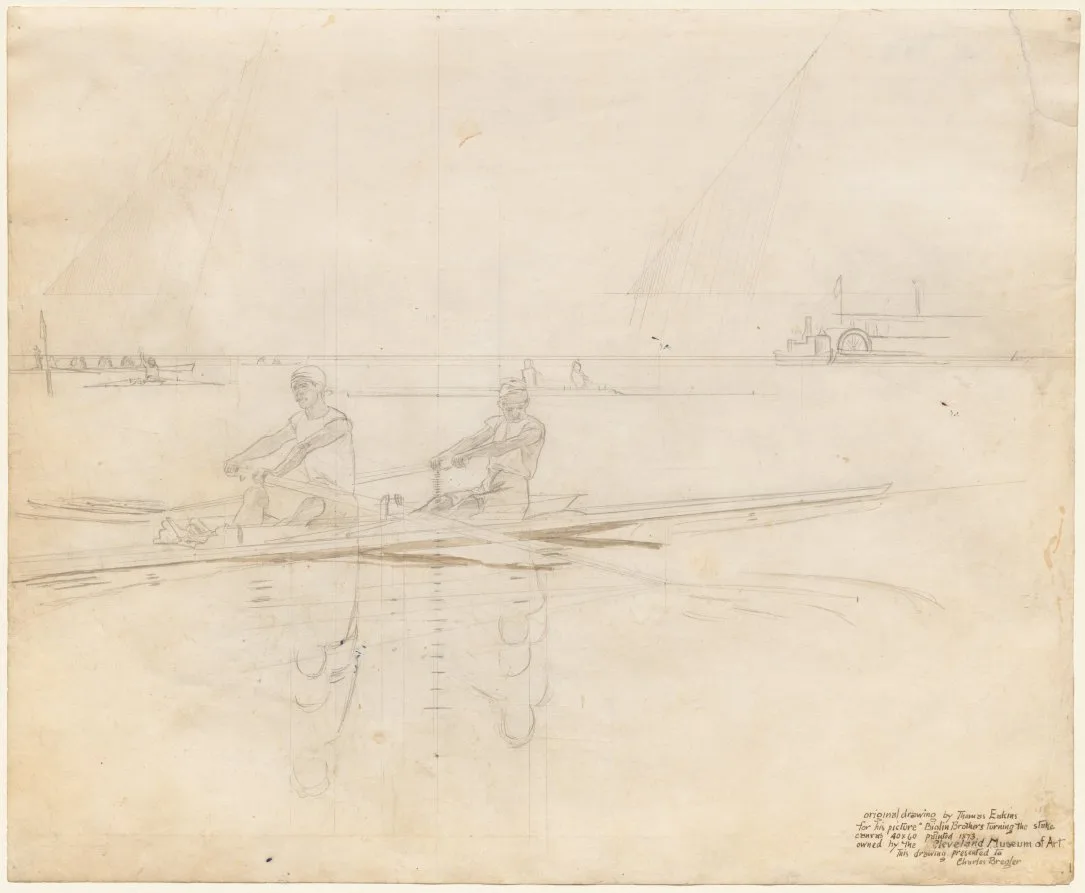
- Drawings and studies kept in the studio, which expose the thinking behind finished pictures
- At least one collector who has bought more than once and paid the full asking price
- Prices that rise in small steps instead of doubling after a single sold out show
- Materials chosen for permanence, since conservation trouble reaches the resale price first
Three of those six is a fair threshold for a first purchase. All six is rare, and usually means the market has already noticed, which is the point at which you stop being early. Nothing on the list guarantees a return, and none of it is meant to. It is a filter for losing less money on the way to learning what you like, which is a smaller and far more achievable goal.
Signals that mislead
Follower counts move faster than careers and predict very little about resale. Prizes vary enormously in weight, and a long row of minor awards often means an artist is good at applications rather than at painting. A booth at an art fair tells you the gallery paid for a booth. Press coverage that reads like a press release usually started life as one, and the phrase about an artist to watch has been printed so often it now carries no information at all.
An artist who can explain why the last picture failed is further along than one who insists nothing has ever failed.
Editorial note, LaArt
The practical version of all this is slow and cheap. Follow ten artists for a year without buying anything, note what each one showed and where, then look again twelve months later to see who is still working in the same direction. Most of them will not be. The two or three still going will cost roughly what they cost last year, and by then you will be able to say precisely why you want one.
Want a curator’s take?
Ask a curator how this connects to the artists and work in the directory.
Ask a Curator-
Emily Dickinson: The Reclusive Poet Who Changed American Verse
Born in 1830 in Amherst, Massachusetts, Emily Dickinson wrote nearly 1,800 poems during her lifetime, though only a handful were published before her death in 1886. Her innovative use of form and syntax reshaped American poetry.
-
July 1951: J. D. Salinger’s The Catcher in the Rye Reaches American Readers
On July 16, 1951, Little, Brown published J. D. Salinger’s first and only full-length novel. The book quickly drew both strong praise and sharp criticism, while its teenage narrator became a distinctive voice in American fiction.
-
Charles Rennie Mackintosh and the Glasgow School of Art
Mackintosh won the competition for the Glasgow School of Art in 1897 as a junior draughtsman on a small budget. The building he produced is the one work everyone agrees about.
Read more in the Journal.
Or browse the full Artists Directory.