
Berthe Morisot and the retrospective of 1896
Morisot died in March 1895. A year later Monet, Degas, Renoir and Mallarme organized a memorial exhibition of about three hundred works, and it is the reason her career was not simply forgotten.
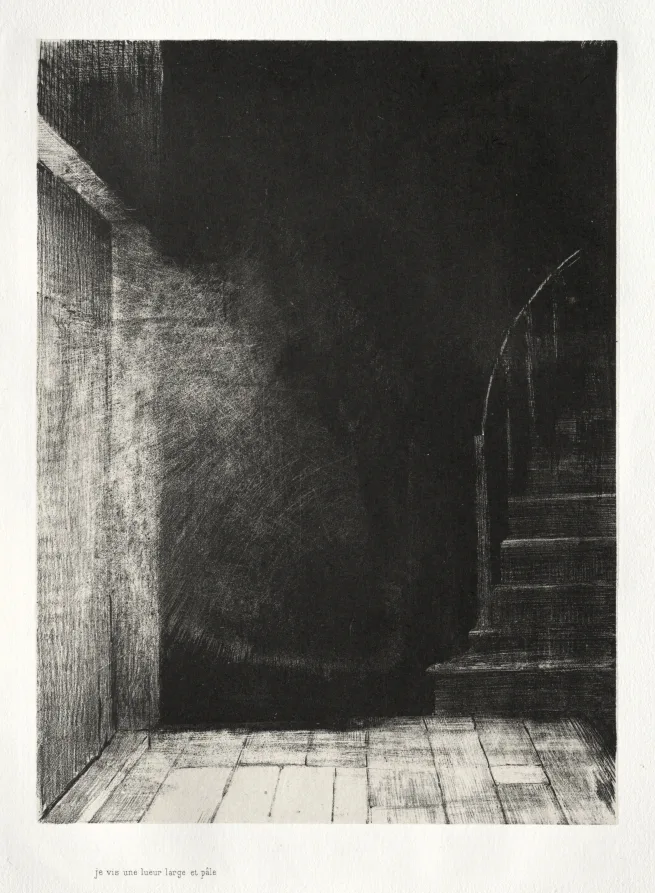
Berthe Morisot died in Paris on 2 March 1895, at fifty four, after nursing her daughter through influenza and catching it herself. Her death certificate recorded no profession. She had shown in seven of the eight impressionist exhibitions, had been painting seriously for more than thirty years, and had sold steadily through Durand-Ruel, and the official record still described her as unemployed.
In March 1896 Durand-Ruel gave over his Paris gallery to a memorial exhibition of about three hundred of her works. It was organized by Claude Monet, Edgar Degas and Auguste Renoir, with Stephane Mallarme writing the catalogue preface. Four men at the center of French painting spent months hanging a dead colleague's work. That fact is the single most useful thing to know about how her contemporaries actually rated her.
What the exhibition had to overcome
Almost everything she made stayed inside a small circle. She painted her sister, her daughter Julie, her garden and her rooms, because those were the subjects a woman of her class could reach without scandal, and much of the output went to family and friends rather than to the trade. A body of work distributed that way disappears quietly within a generation. Gathering three hundred pieces in one room was the only way to make the scale of it visible.
The critical response was respectful and slightly condescending, which was the standard tone for women painters at the time. Reviewers praised the lightness and the charm and said very little about the construction. What they missed is the thing that holds up best now: the unfinished edges, the bare canvas left showing, the way a figure dissolves at the boundary. Those were deliberate decisions and she made them earlier than most of the group.
Julie Manet, her daughter, was seventeen when the exhibition opened and had been left in the care of Mallarme. She kept a diary through those years that is now a primary source for the period, and she spent the rest of a long life managing her mother's reputation and placing works in public collections. A great deal of what museums hold today passed through her hands. Reputations of this kind are usually kept alive by one determined person.
- She exhibited in seven of the eight impressionist exhibitions between 1874 and 1886
- Edouard Manet was her brother-in-law and she sat for several of his best known pictures
- Durand-Ruel handled her work during her life and hosted the memorial exhibition in 1896
- The 1896 show gathered roughly three hundred paintings, pastels, watercolors and drawings
- Mallarme wrote the preface and acted as guardian to her daughter Julie
- Julie Manet placed works in French public collections over the following decades
Her market took a long time to move and then moved sharply. For most of the twentieth century she was priced well below the men she exhibited with, and a good Morisot cost a fraction of a comparable Monet. That gap narrowed considerably from the 1990s onward as museums began mounting monographic exhibitions and as buyers noticed the supply was small. She worked slowly and did not live long, so there is not much of it.
How to look at the work
Start with the edges rather than the faces. In a strong Morisot the paint runs out before the form closes, and the picture holds together anyway because the drawing underneath is sound. Weak examples, usually late and hurried, simply look unfinished. The Musee d Orsay and the National Gallery of Art both hold good examples, and comparing two from the same decade makes the distinction obvious quickly.
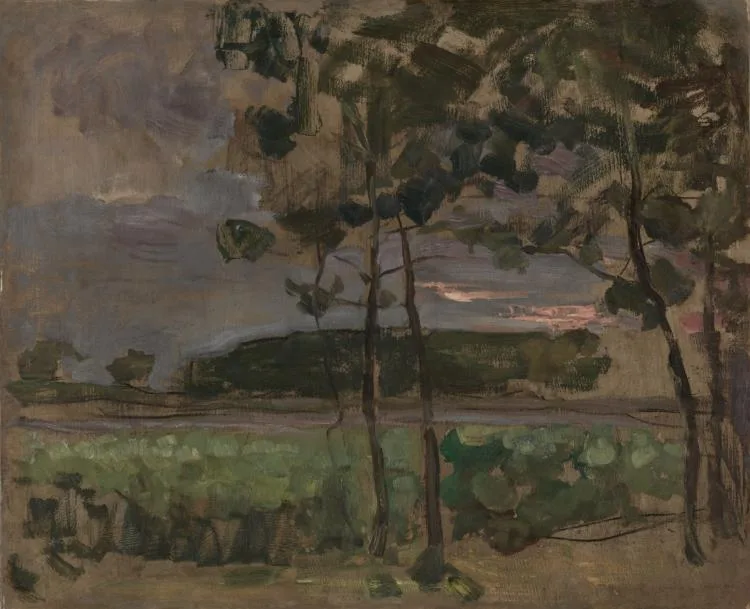
I do not think there has ever been a man who treated a woman as an equal, and that is all I would have asked, for I know I am worth as much as they.
Berthe Morisot, from her notebooks
The 1896 exhibition did not make her famous. It did something more modest and more durable: it put a complete body of work in front of the people who write catalogues, and it left a printed record that later scholars could work from. Without that room, three hundred pictures spread across a hundred private houses would have taken far longer to find again.
Want a curator’s take?
Ask a curator how this connects to the artists and work in the directory.
Ask a Curator-

Emily Dickinson: The Reclusive Poet Who Changed American Verse
Born in 1830 in Amherst, Massachusetts, Emily Dickinson wrote nearly 1,800 poems during her lifetime, though only a handful were published before her death in 1886. Her innovative use of form and syntax reshaped American poetry.
-
July 1951: J. D. Salinger’s The Catcher in the Rye Reaches American Readers
On July 16, 1951, Little, Brown published J. D. Salinger’s first and only full-length novel. The book quickly drew both strong praise and sharp criticism, while its teenage narrator became a distinctive voice in American fiction.
-
Charles Rennie Mackintosh and the Glasgow School of Art
Mackintosh won the competition for the Glasgow School of Art in 1897 as a junior draughtsman on a small budget. The building he produced is the one work everyone agrees about.
Read more in the Journal.
Or browse the full Artists Directory.