
Alphonse Mucha and the poster that made his name
A printing house in Paris handed Mucha an urgent poster job over the New Year holiday of 1894 because nobody else was in the building. The sheet that resulted set the terms of the rest of his working life.
Alphonse Mucha was thirty four and living on illustration work when a Paris printing house handed him a job nobody else wanted. It was the week between Christmas and New Year of 1894, the staff artists were away, and Sarah Bernhardt needed a poster for a play already running at the Theatre de la Renaissance. Mucha was correcting proofs at Lemercier that morning and took the commission because he was the only one there who could.
The sheet that went up on Paris walls on the first day of 1895 did not look like other posters. It was very tall and narrow, close to life size, printed in muted colors rather than the flat brights the trade preferred, and it showed Bernhardt standing still instead of acting. People cut it off the hoardings within days. Bernhardt put Mucha under contract, and for the next six years he designed her posters, her sets, her costumes and her jewelry.
What the job actually was
A theatrical poster in 1895 was advertising, printed to a deadline by a commercial lithography shop. Mucha worked on the stones and on the color separations with the printers, which is why good impressions carry a depth that later reproductions lose. The Gismonda sheet had to be printed in two parts because no press bed in the shop was long enough to take it whole. Collectors still look for the join.
After Gismonda his printer was Champenois, and that arrangement changed how his work reached the public. Champenois issued the posters, then reissued the same designs as decorative panels without lettering, on paper and on satin, in sizes that fit a domestic wall. Mucha drew against a salary. The business model, art priced for an apartment rather than for a collector, is the part of his career most often left out of the story.
The style was called le style Mucha in Paris before anyone attached it to a movement. The vocabulary is easy to list: a woman at the center, hair drawn as ornament, a disc behind the head, a border of stylized plants, and lettering built into the design rather than dropped on top. Mucha said he was working from Czech folk decoration and from Byzantine mosaic, not from a French fashion. The market did not care where it came from and wanted more of it.
- Original Champenois printings carry the printer credit in small type along the lower edge
- The decorative panels exist in several formats, and satin versions are scarcer than paper ones
- Reprints from the 1960s and 1970s are common and sell for a fraction of period sheets
- Posters were folded for storage, so a horizontal crease is usual rather than a defect
- Linen backing is standard conservation practice and does not by itself lower the price
- Color loss is the real problem, since the reds and pinks fade badly under daylight
Condition drives price in this market more than rarity does. A common design in strong color beats a scarce one that has gone brown, and dealers who handle posters full time will say the same thing without being asked. These sheets were made to be pasted up and thrown away, so survival in good state is the exception rather than the rule. Read the condition report before you read the estimate.
What survived and where to see it
Mucha left Paris in 1910 and spent the rest of his life on the Slav Epic, twenty large canvases on Slavic history that he gave to the city of Prague. He died in 1939, a few months after the German occupation and an interrogation by the Gestapo. For decades afterwards the posters were treated as commercial ephemera and the late paintings as an embarrassment. The Metropolitan Museum of Art holds his prints, and the Met collection search is the easiest way to see a run of them.
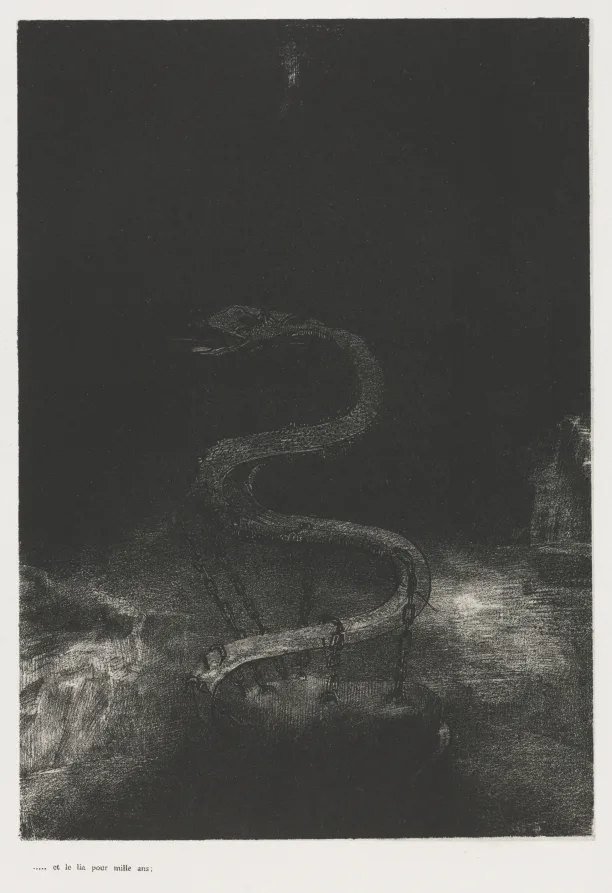
A poster that was pasted to a wall and survived anyway is a different object from a print that spent a century in a drawer, and the market prices that difference every week.
LaArt editorial note
The lesson of Gismonda is about timing rather than genius. Mucha had spent ten years drawing competent illustrations nobody remembers, and then one deadline nobody else would take put his work at eye level on every boulevard in Paris. The style was already in his hands. What he needed was a wall.
Want a curator’s take?
Ask a curator how this connects to the artists and work in the directory.
Ask a Curator-

Emily Dickinson: The Reclusive Poet Who Changed American Verse
Born in 1830 in Amherst, Massachusetts, Emily Dickinson wrote nearly 1,800 poems during her lifetime, though only a handful were published before her death in 1886. Her innovative use of form and syntax reshaped American poetry.
-
July 1951: J. D. Salinger’s The Catcher in the Rye Reaches American Readers
On July 16, 1951, Little, Brown published J. D. Salinger’s first and only full-length novel. The book quickly drew both strong praise and sharp criticism, while its teenage narrator became a distinctive voice in American fiction.
-
Charles Rennie Mackintosh and the Glasgow School of Art
Mackintosh won the competition for the Glasgow School of Art in 1897 as a junior draughtsman on a small budget. The building he produced is the one work everyone agrees about.
Read more in the Journal.
Or browse the full Artists Directory.