
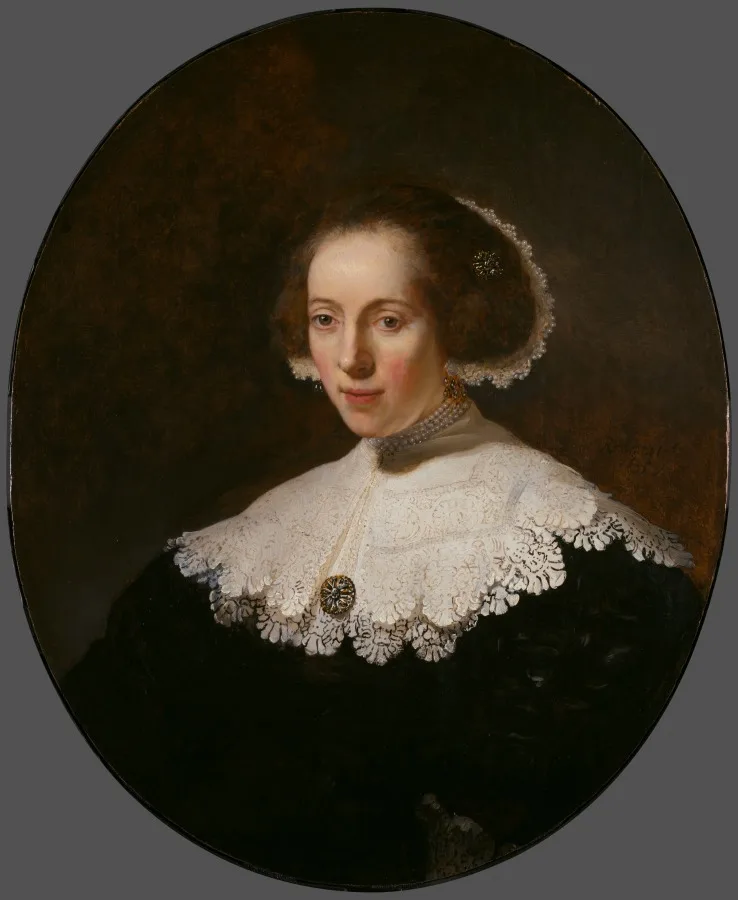
Portrait painting
Rembrandt van Rijn
Rembrandt painted portraits for money and etched for himself. The Cleveland panel, dated by the museum to 1635 or earlier, catches the Amsterdam manner that made him the busiest face painter in the city.
Rembrandt van Rijn ran the busiest portrait practice in Amsterdam for roughly a decade, and the Cleveland panel comes from the middle of that run. He was born in Leiden in 1606, the son of a miller, and left the university there almost at once to train as a painter. A few months in the Amsterdam workshop of Pieter Lastman gave him the storytelling habits that never left the work. By 1631 he had moved to the city for good and the commissions started arriving faster than he could take them.
Portraiture was the engine of that career. Amsterdam merchants wanted likenesses that looked expensive without looking ridiculous, and Rembrandt supplied a formula: a dark ground, one light source from the upper left, and a head pushed forward into that light while the costume sinks back into shadow. Sitters queued for it and paid well. The money went into a large house on the Breestraat, a collection of shells, armour and prints, and a press for the etchings that mattered more to him than the commissions did.
Leiden training and the Amsterdam years
What separates his commissioned heads from the competition is the treatment of the edge where light meets shadow. Most Dutch portraitists of the period drew a clean boundary around the face and filled it in, which produces a likeness that sits on the surface. Rembrandt let the shadow eat into the contour, so the head reads as a solid object occupying a room rather than a shape pasted onto a backdrop. The trick costs nothing in accuracy and buys a great deal in presence, and it is visible within two seconds of walking up to any of these panels.
His private work moved in the opposite direction from the commissions. The etchings, especially the self-portraits and the studies of beggars, are fast, unflattering and often funny, and he kept making them through the years when portrait orders slowed. That body of prints is the reason his reputation survived the eighteenth century, when a good deal of educated opinion thought his paintings too rough for serious company. Collectors across Europe knew the prints long before they knew the pictures.
The insolvency of 1656 is the fact everyone repeats, and it is worth getting right. Rembrandt was not destitute; he was overextended, mostly on the house and on an art collection he bought with the appetite of a dealer rather than a hobbyist. The court arranged a sale of his goods, and the surviving inventory reads like the contents of a small museum. He went on painting at much the same rate afterward, which is not the behaviour of a man who had been broken by it.
- One light source from the upper left, with the shadow side of the face left open instead of outlined
- Thick paint in the lit passages and thin, almost transparent handling in the darks
- Hands summarised in a few strokes while the head carries nearly all of the detail
- Costume described through highlights on gold and lace rather than by drawing every thread
- A signature that changes across the career, from an early monogram to the first name standing alone
- Wood panels in the early Amsterdam years and canvas more often later as the pictures grew
Those habits are also what the imitators went after, which is why the attribution history is such a mess. The Rembrandt Research Project spent decades moving pictures into and out of the accepted list, and museums quietly changed labels to workshop or circle of Rembrandt. A demotion is a statement about the paint and the documents, not a verdict on the picture hanging in front of you. Several of the reattributed works are better than things that kept the name.
The late manner and why it divides people
After 1650 the paint gets thicker, the drawing looser and the finish is left deliberately open. Some contemporaries read that as carelessness, and the complaint followed him into the next century. Modern viewers read the same surfaces as the most advanced painting produced anywhere in Europe at the time. Both reactions come from one fact: the late pictures ask the viewer to finish them, and a portrait is not usually supposed to make that demand.
The Cleveland panel is a working portrait rather than a showpiece, and that is why it repays a slow look: the paint does exactly as much as the commission required and stops there.
Editorial note, Canvara
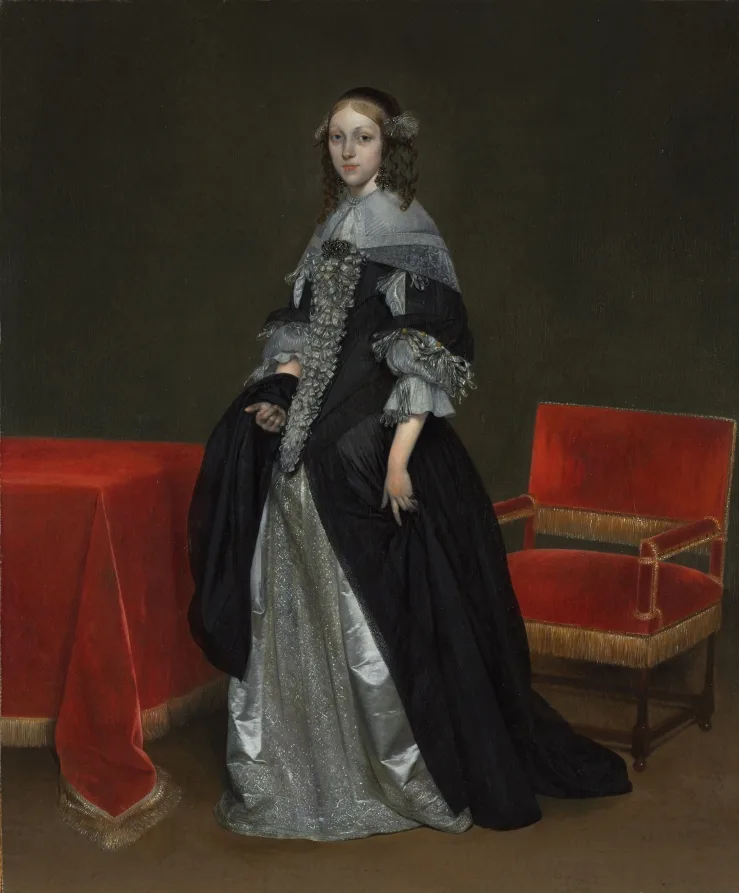
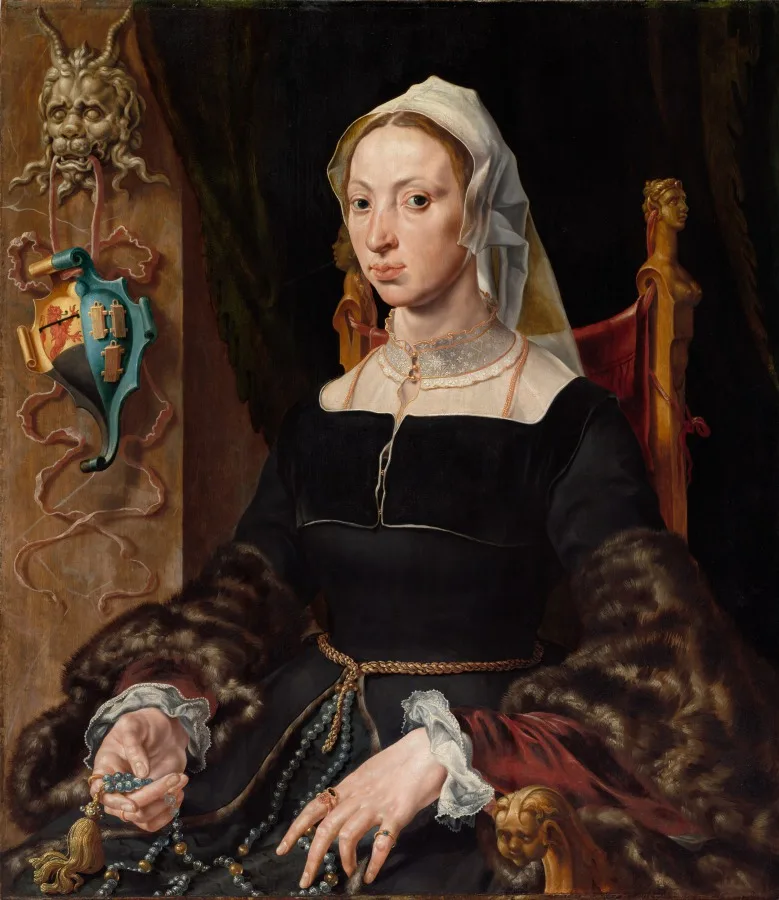
For anyone reading Rembrandt in a museum, the useful comparison is a Dutch portrait of the same decade hanging nearby. Put this panel beside a smoothly finished head by one of his Haarlem or Amsterdam rivals and the difference in ambition registers immediately. He was solving a different problem from theirs, and the sitters who understood that kept coming back to him.
Interested in Rembrandt van Rijn’s work?
Ask a curator for current availability, pricing and how this artist would sit in a collection.
Ask a CuratorBrowse the full Artists Directory.
Or read more in the Journal.
Ask about Rembrandt van Rijn directly
Availability, current prices, condition, how the work sits in a collection. Leave a number and an editor calls you back within two business days.
This form needs JavaScript. Write to editor@laart.us instead — an editor answers every letter.