
Court portraiture
Diego Velazquez
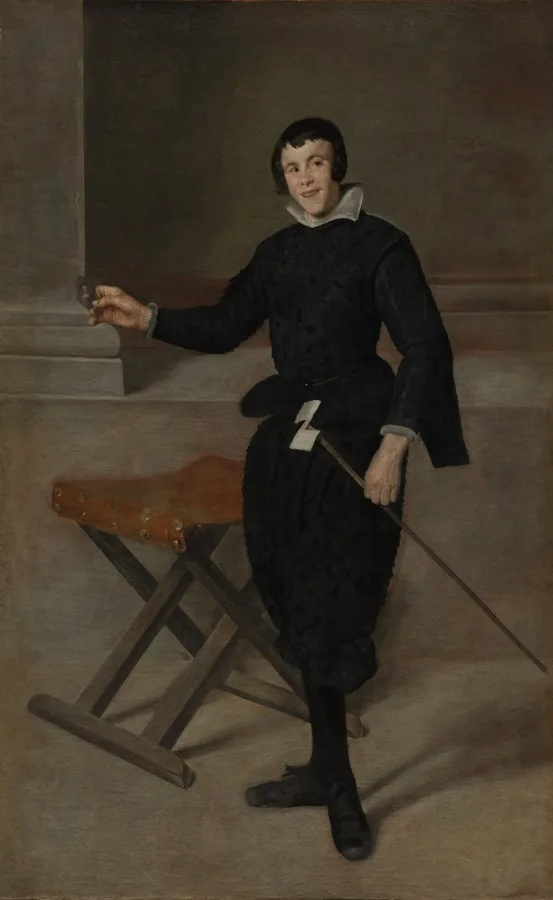
Diego Velazquez served Philip the Fourth for most of his working life and painted the court staff with the same attention as the king. The Cleveland portrait of the jester Calabazas comes from his early Madrid years.
Diego Velazquez was born in Seville in 1599 and apprenticed to Francisco Pacheco, a painter of modest gifts and considerable learning who later became his father in law. Seville gave him a training in tight naturalism, and his earliest surviving works are kitchen scenes with figures around a table and objects rendered with almost tactile precision. The water seller and the old woman frying eggs belong to that period. He was barely out of his teens when he painted them.
In 1623 he went to Madrid, painted Philip the Fourth and was appointed court painter almost immediately. That appointment settled the rest of his life. He had a salary, lodgings in the palace and a monopoly on royal portraits, and in exchange he took on court duties that grew heavier with the years until he was effectively running palace ceremonies. The output is small compared with Rubens or van Dyck because so much of his time went elsewhere.
Seville naturalism and the move to Madrid
The Cleveland canvas of the jester known as Calabazas belongs to the early 1630s, when Velazquez began the series of portraits of dwarfs, jesters and other members of the household who entertained the court. These pictures are the reason his reputation among painters sits where it does. He gave the palace staff the same scale, the same seriousness of attention and the same quality of paint that he gave the royal family, without sentimentality and without mockery.
Rubens came to Madrid on a diplomatic mission in 1628 and the two painters spent time together. Shortly afterward Velazquez left for Italy, the first of two long trips. He looked at Titian, Tintoretto and the Roman antiquities, and the work that followed is looser, cooler and more atmospheric than what came before. The second trip, around 1650, produced the portrait of Innocent the Tenth in Rome, which is still the standard by which papal portraits are measured.
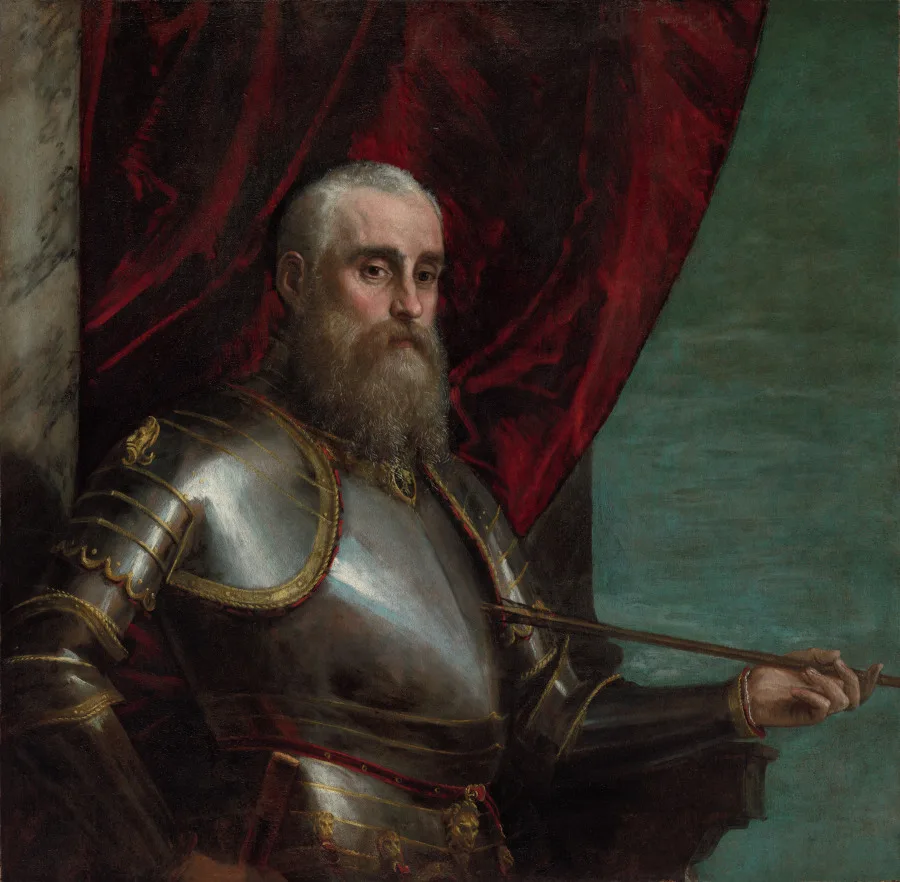
The technical account of his late manner is simple to state and impossible to imitate. He worked thinly, left the ground doing visible work, and described detail with strokes that stop being descriptive the moment you approach the canvas. Lace, embroidery and hair are indicated rather than drawn. From the correct distance the illusion is total, and there is no transitional zone where the picture looks half finished.
- Thin paint over a warm ground, with the ground left visible in shadows and half tones
- Detail suggested by broken strokes that resolve only at viewing distance
- Silver, black, rose and ochre repeated across the mature court portraits
- Faces built with very few marks once the drawing underneath is correct
- Backgrounds kept atmospheric rather than architectural in most of the late work
- Repainting visible in some canvases where he adjusted arms, hands or hemlines
Las Meninas, painted around 1656, gathers everything he knew into one canvas: the royal family, the household staff, his own figure at the easel, a mirror and a doorway that both open the space outward. Writers have argued about its meaning for three hundred years. What is not in dispute is the paint handling, which is the most confident in the history of the Spanish school and which later painters from Goya to Manet treated as a benchmark.
Why painters treat him as the technical limit
Manet called Spain the place to learn painting and went to Madrid to look. Sargent copied Velazquez in the Prado. Francis Bacon spent years working through the Innocent the Tenth. The attraction is economy: maximum information from minimum material, with no visible effort and no decoration. That is the hardest thing in representational painting, and Velazquez is the standing proof that it can be done.
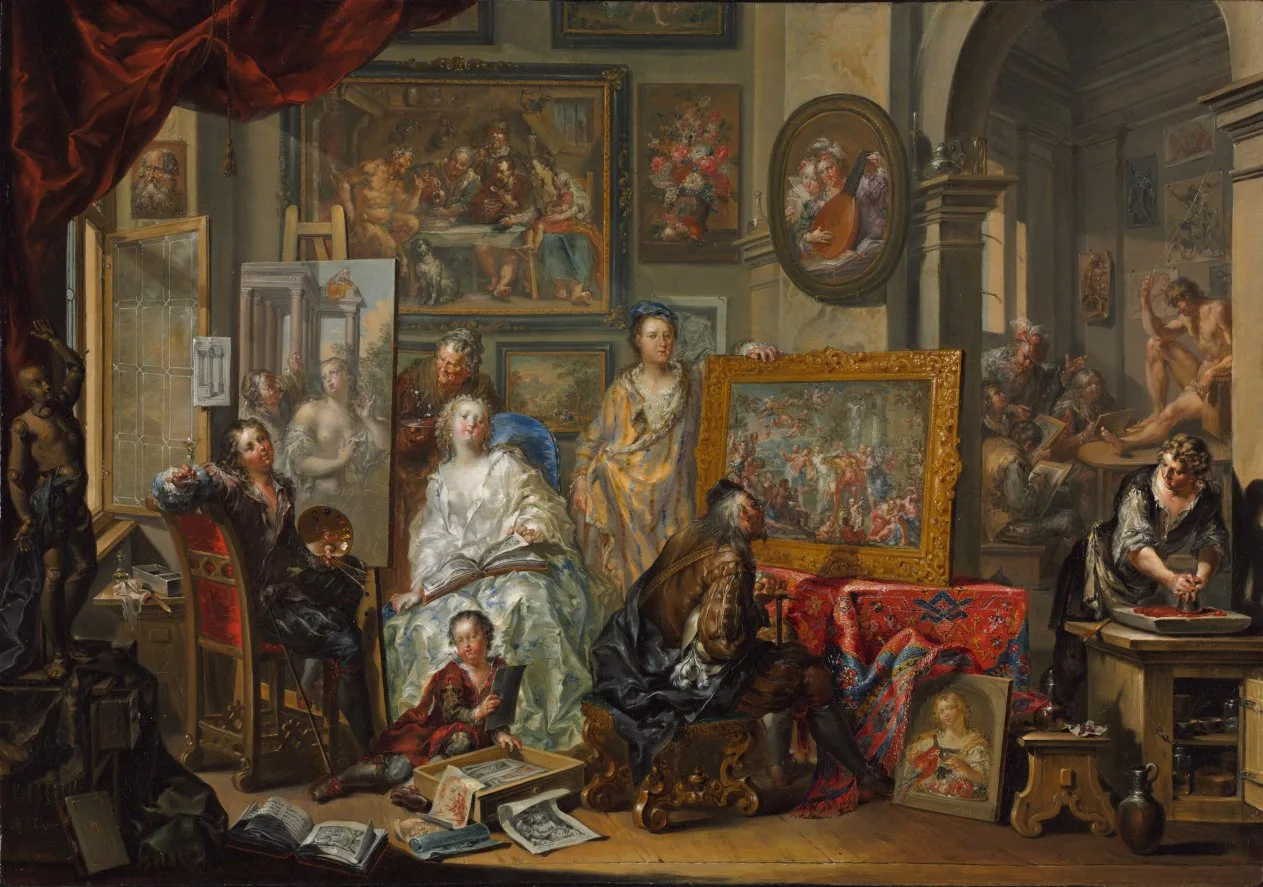
The court portraits work because Velazquez refused to rank his sitters by paint quality: a jester gets the same attention, the same scale and the same honesty as an infanta.
Editorial note, Canvara
He died in Madrid in 1660, shortly after organising the ceremonies for a royal wedding on the French border. The surviving body of work is small, perhaps a hundred and twenty paintings, and nearly all of it belongs to museums. For anyone starting out, the Prado is the whole education, and the scattered pictures in Cleveland, London, New York and Vienna fill in the edges.
Interested in Diego Velazquez’s work?
Ask a curator for current availability, pricing and how this artist would sit in a collection.
Ask a CuratorBrowse the full Artists Directory.
Or read more in the Journal.
Ask about Diego Velazquez directly
Availability, current prices, condition, how the work sits in a collection. Leave a number and an editor calls you back within two business days.
This form needs JavaScript. Write to editor@laart.us instead — an editor answers every letter.